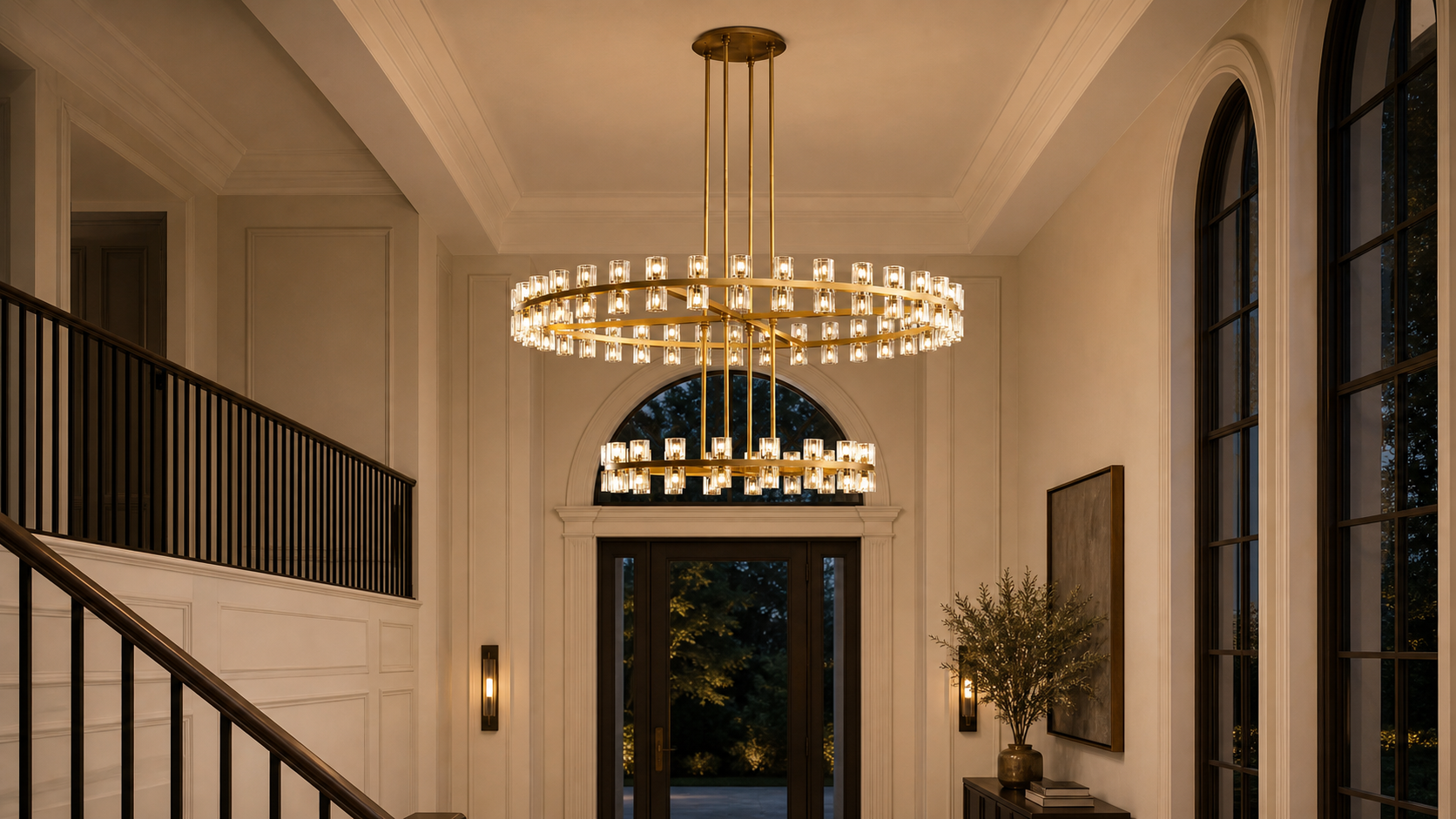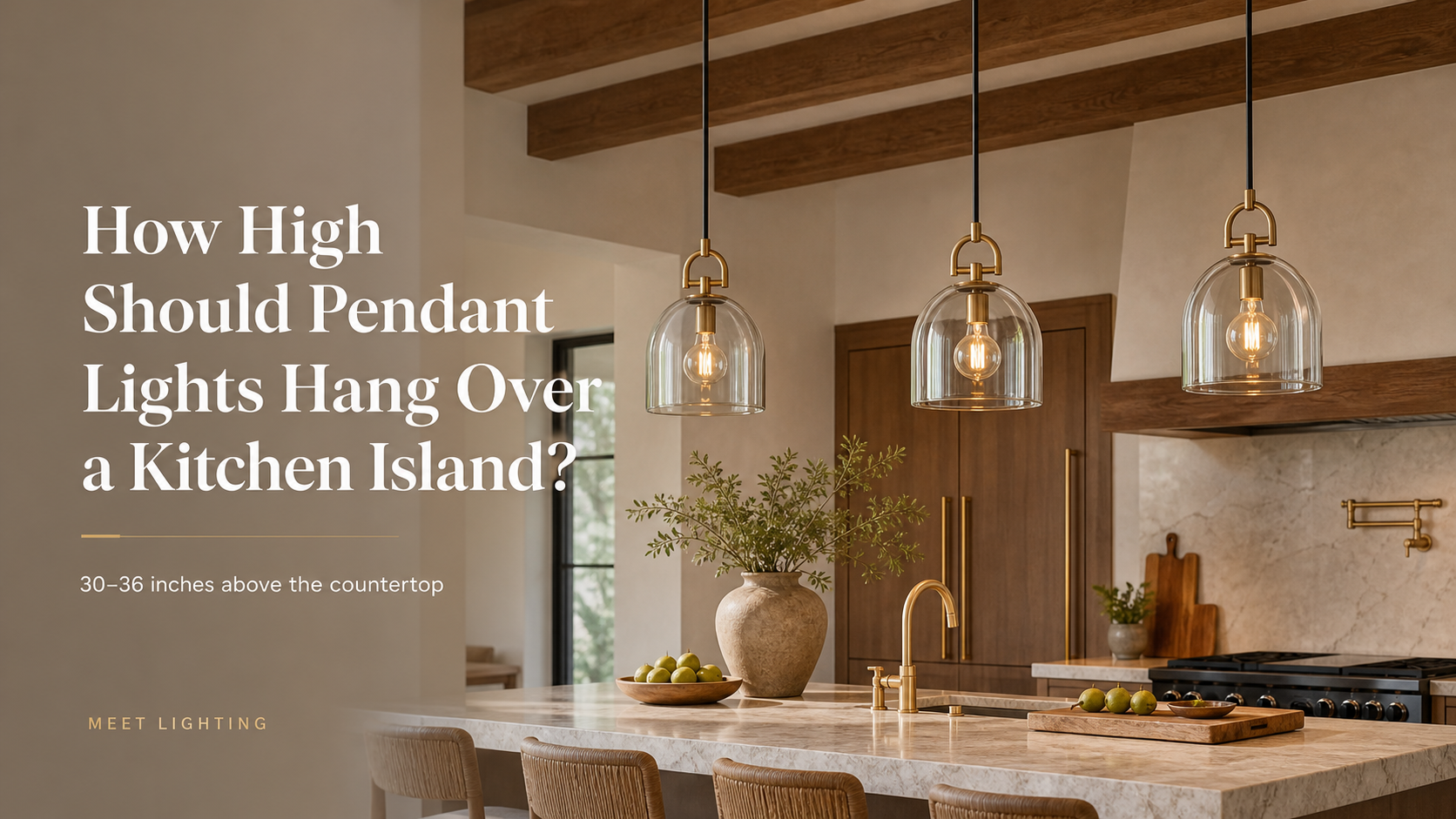

Quick answer: Choose a dining chandelier that is roughly one-half to two-thirds the width or length of the table. The fixture should generally be at least 12 inches narrower than the tabletop, leaving about 6 inches of visual clearance on each side.
The table is the most useful sizing reference because it anchors the chandelier. Room dimensions, ceiling height and fixture shape then help you refine the choice.
The simplest dining chandelier size formula
For a rectangular table, calculate both width and length:
- Fixture width: table width minus at least 12 inches.
- Fixture length: approximately one-half to two-thirds of the table length.
For a round table, choose a chandelier diameter between one-half and two-thirds of the tabletop diameter. A 60-inch round table, for example, usually works well with a chandelier about 30 to 40 inches wide.
| Table size | Useful chandelier starting size |
|---|---|
| 48-inch round table | 24-32-inch diameter |
| 60-inch round table | 30-40-inch diameter |
| 72-inch round table | 36-48-inch diameter |
| 72 x 36-inch rectangular table | 24-30 inches wide and 36-48 inches long |
| 84 x 42-inch rectangular table | 28-36 inches wide and 42-56 inches long |
| 96 x 44-inch rectangular table | 30-38 inches wide and 48-64 inches long |
These ranges are starting points. An airy open-frame chandelier can be slightly larger without feeling heavy, while a dense crystal or alabaster fixture may have more visual weight at the same measured size.
Round table: choose a round chandelier
A round chandelier usually creates the most natural relationship with a circular table. It repeats the table shape and distributes visual weight evenly. Browse round chandeliers and compare the fixture diameter with the table diameter, not just with the room width.
A cluster of pendants can also work, but the overall cluster should still fit within the recommended diameter and leave a clear view across the table.
Rectangular table: choose a linear chandelier
A long rectangular table benefits from a fixture that spreads light across its length. A linear chandelier between one-half and two-thirds of the table length usually feels balanced. For very long tables, two matching chandeliers can work better than one undersized fixture, provided the pair is centered as a complete arrangement.
How high should a chandelier hang above a dining table?
With an 8-foot ceiling, hang the bottom of the chandelier about 30 to 36 inches above the tabletop. Add approximately 3 inches for each additional foot of ceiling height:
- 8-foot ceiling: 30-36 inches above the table.
- 9-foot ceiling: 33-39 inches above the table.
- 10-foot ceiling: 36-42 inches above the table.
Before installation, sit at the table and check that the fixture does not block faces or expose an uncomfortable bulb glare. In a formal room, a larger fixture can often hang toward the lower end of the range; in an open-plan space, raising it slightly may preserve longer views.
What if the table extends?
Size the chandelier for the table configuration used most often. If the leaves are added only for occasional holidays, a fixture sized to the fully extended table may look too large during everyday use. If the table stays extended most of the year, use the larger dimension. A linear fixture with a visually open frame is forgiving across multiple table lengths.
Check the chandelier against the room size
When a dining table is not yet available, add the room length and width in feet; the same number in inches offers a rough chandelier diameter. A 12-by-14-foot room suggests a fixture near 26 inches in diameter. Once the table is in place, use the table-based formula as the stronger guide.
In an open floor plan, the dining zone may support a larger chandelier because the fixture helps define the area. In a compact enclosed room, preserve at least 30 to 36 inches of walking clearance between the table edge and nearby walls or furniture.
Consider visual weight, not dimensions alone
Crystal tiers, thick alabaster shades and dark metal frames can look substantial even at a moderate diameter. Clear glass and thin open frames appear lighter and can often be sized up. Review product photos, but always rely on the listed dimensions. The dining room lighting collection includes round, linear, crystal and alabaster options for comparing proportions.
Light output and atmosphere
A dining chandelier should illuminate food and faces without producing glare. Look for dimmer compatibility so the room can transition from homework or daytime use to a relaxed dinner. If the chandelier is mainly decorative, add wall sconces or recessed lighting rather than using overly bright bulbs in the centerpiece.
Final buying checklist
- Measure the table width, length and everyday configuration.
- Keep the chandelier at least 12 inches narrower than the tabletop.
- Choose a length about one-half to two-thirds of a rectangular table.
- Match round fixtures to round tables and linear fixtures to long tables.
- Check fixture height, canopy size, weight and adjustable drop.
- Plan for 30-36 inches above the table with an 8-foot ceiling.
Frequently asked questions
Can a dining chandelier be wider than the table?
It is usually best to keep it narrower. A fixture wider than the table can feel top-heavy and creates a greater chance of someone bumping it when standing. Sculptural fixtures with narrow arms are exceptions, but their widest point still needs careful review.
Is one large chandelier or two smaller chandeliers better?
One fixture creates a strong central focal point. Two fixtures can light a very long table more evenly. Treat the pair as one composition and leave consistent spacing between the fixtures and table ends.
Should the chandelier be centered in the room or over the table?
Center it over the dining table. Furniture placement defines the functional zone, and a chandelier centered in the room but not over the table usually looks accidental.