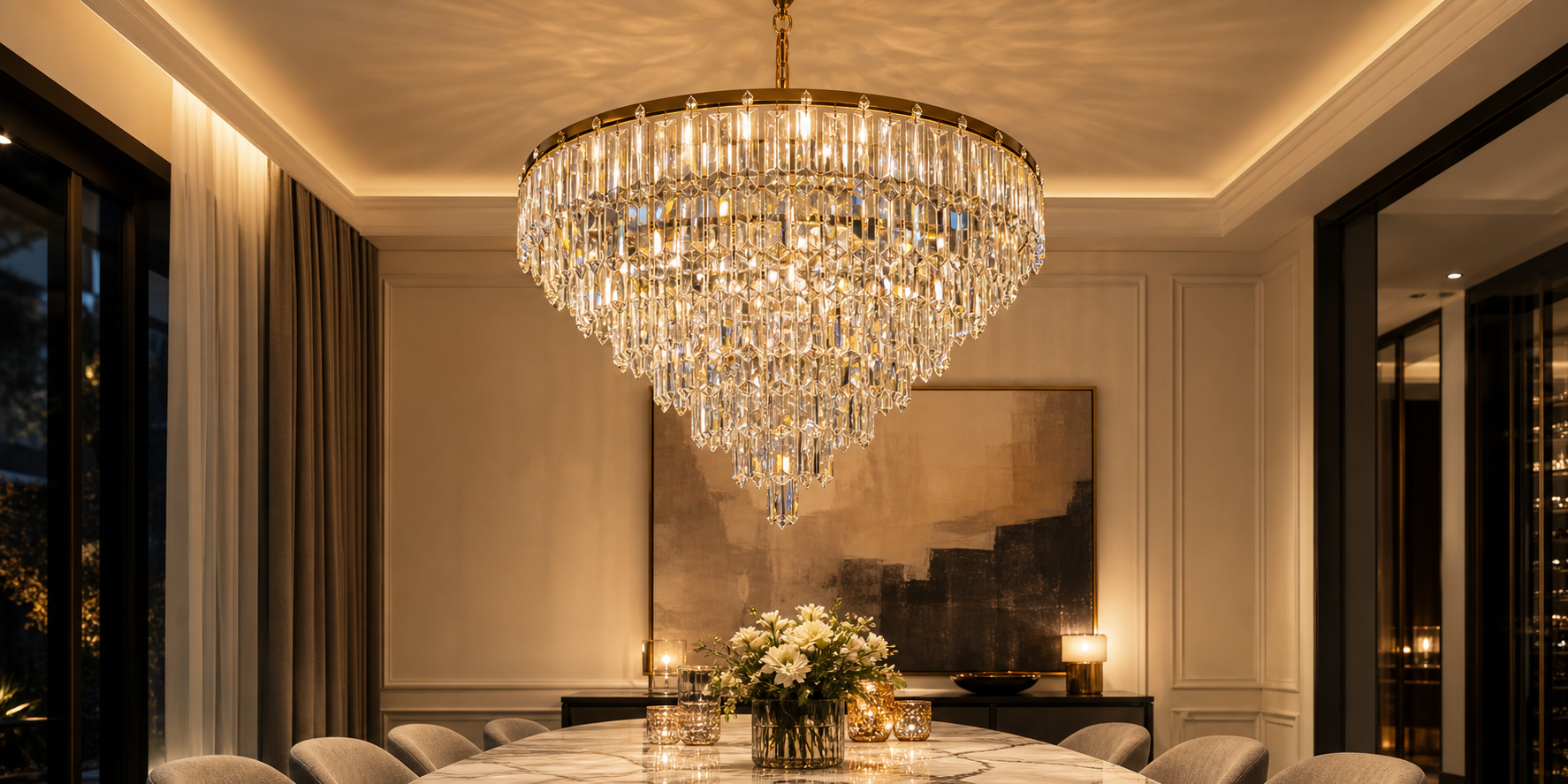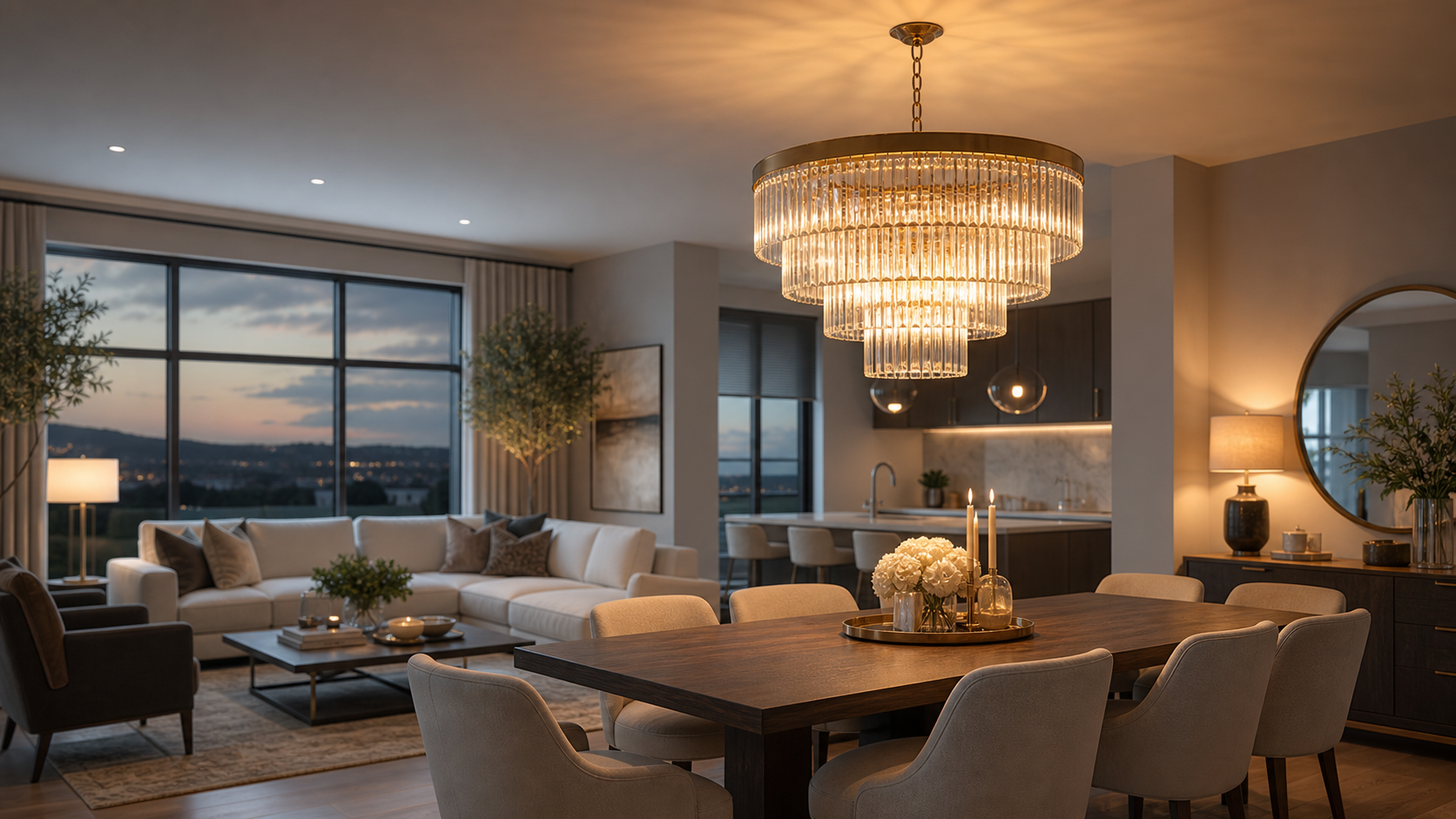

A beautiful chandelier can still fail in a room if the size is wrong. This is why many lighting shoppers ask the same practical question before buying: can a chandelier be customized, and when is custom sizing actually worth it?
The answer depends on your ceiling height, room scale, table size, installation location, and the fixture design. Custom lighting is not only for unusual homes. It is often the best solution when a standard chandelier is almost right but not quite balanced for the space.
When Standard Sizes Work Well
Standard chandelier sizes work well when your room has common proportions and the fixture is going above a typical dining table, bedroom, living room, or foyer. If the product offers multiple sizes, you can often choose the closest fit without changing the design.
For example, a round chandelier with several diameter options may work for many dining rooms. A long linear or oval chandelier may work well above a rectangular table when the fixture length is roughly one-half to two-thirds of the table length.
Before requesting customization, check the available size options on the product page. Many Meet Lighting fixtures already include several sizes, finishes, or hanging lengths.
When Custom Sizing Is Worth It
1. Your Ceiling Is Very High
Two-story foyers, tall staircases, and vaulted living rooms often need more height than a standard chandelier provides. A fixture that looks impressive in photos may feel too small when installed in a tall open space.
For high ceilings, customization may involve a longer chain, extra rods, a taller chandelier body, or a multi-tier design. This is especially useful for staircase chandeliers and large foyer fixtures.
2. Your Dining Table Is Extra Long
Long dining tables can make a standard round chandelier feel visually narrow. In this case, an elongated chandelier, oval chandelier, or linear fixture is usually better.
The Delsie Oval Chandelier is a good example of a shape that works naturally above rectangular dining tables because it follows the length of the table instead of concentrating all the light in the center.
3. Your Room Needs a Specific Drop Height
Drop height is one of the most important customization details. A chandelier should feel connected to the furniture or room below it without blocking views or making the ceiling feel lower.
For dining tables, the bottom of the chandelier is often installed about 30 to 36 inches above the tabletop. For open walkways, foyers, and living rooms, you need enough clearance for people to walk comfortably underneath.
4. You Need a Finish That Matches Existing Hardware
Finish matters when a room already has brass cabinet pulls, black window frames, bronze faucets, or nickel hardware. A custom finish may help the chandelier look intentional instead of close but slightly off.
Not every fixture can be customized in every finish, but it is worth asking when the chandelier will sit near other metal details.
5. You Are Buying for a Designer or Trade Project
Interior designers often need lighting to fit a precise concept, elevation drawing, or installation plan. In those cases, customization can help avoid expensive compromises later.
If you are working on a new build, remodel, hotel, restaurant, or large residential project, it is better to confirm size, finish, and hanging length before the electrical rough-in is finalized.
What Measurements Should You Prepare?
Before asking for a custom chandelier, collect a few simple measurements. This makes the process faster and helps avoid mistakes.
- Room length and width
- Ceiling height
- Table or island length and width, if applicable
- Desired hanging height from floor or tabletop
- Photos of the room or design rendering
- Preferred finish, size, and fixture style
If you are replacing an existing chandelier, measure the current fixture and note what you like or dislike about it. Sometimes the best custom solution is simply wider, shorter, warmer, or less visually heavy than the old fixture.
What Can Usually Be Customized?
Customization depends on the fixture, but common requests include:
- Longer or shorter hanging chain or rods
- Fixture diameter or length adjustments
- Finish changes such as brass, bronze, black, or nickel
- Canopy adjustments for sloped ceilings
- Multi-tier layouts for high ceilings
- Bulb holder or LED color temperature options on select designs
For statement fixtures such as large chandeliers, staircase lights, or custom dining room pieces, small changes can make a big difference in how the room feels.
When You Should Not Customize
Customization is helpful, but it is not always necessary. Avoid custom changes when the standard size already fits well, when you need the fixture urgently, or when the requested change would alter the design too much. A heavily modified fixture can lose the proportions that made it attractive in the first place.
If you are unsure, choose the closest standard size first and ask whether a smaller adjustment, such as chain length or canopy type, is enough.
How to Start a Custom Lighting Request
Start by choosing the fixture style you like from our chandelier collection, pendant light collection, or flush mount collection. Then prepare your measurements and contact Meet Lighting before placing the order.
A good custom lighting request should answer one question clearly: what problem does the standard size not solve? Once that is clear, it is much easier to recommend the right size, drop height, finish, and fixture type for your home.