
One of the most common lighting questions is not about style. It is about feeling: should a chandelier or pendant light use warm light, cool light, or something in between?
The right color temperature can make an expensive fixture look calm and flattering. The wrong one can make the same room feel flat, cold, or too yellow. If you are choosing a chandelier, pendant light, wall sconce, or flush mount for your home, use this guide before you buy bulbs or approve a custom LED fixture.
What Does Color Temperature Mean?
Color temperature is measured in Kelvin, usually written as K. Lower numbers look warmer and more golden. Higher numbers look cooler and whiter.
- 2700K: warm, soft, cozy, similar to traditional incandescent lighting.
- 3000K: warm white, still inviting but a little cleaner and brighter.
- 3500K: balanced neutral white, useful when you want less yellow without going cold.
- 4000K and above: cool white, often better for task-heavy spaces than relaxing rooms.
For most residential chandeliers and decorative fixtures, 2700K to 3000K is the safest range. It keeps brass, crystal, glass, alabaster, and wood finishes looking rich instead of harsh.
Best Color Temperature by Room
Dining Room
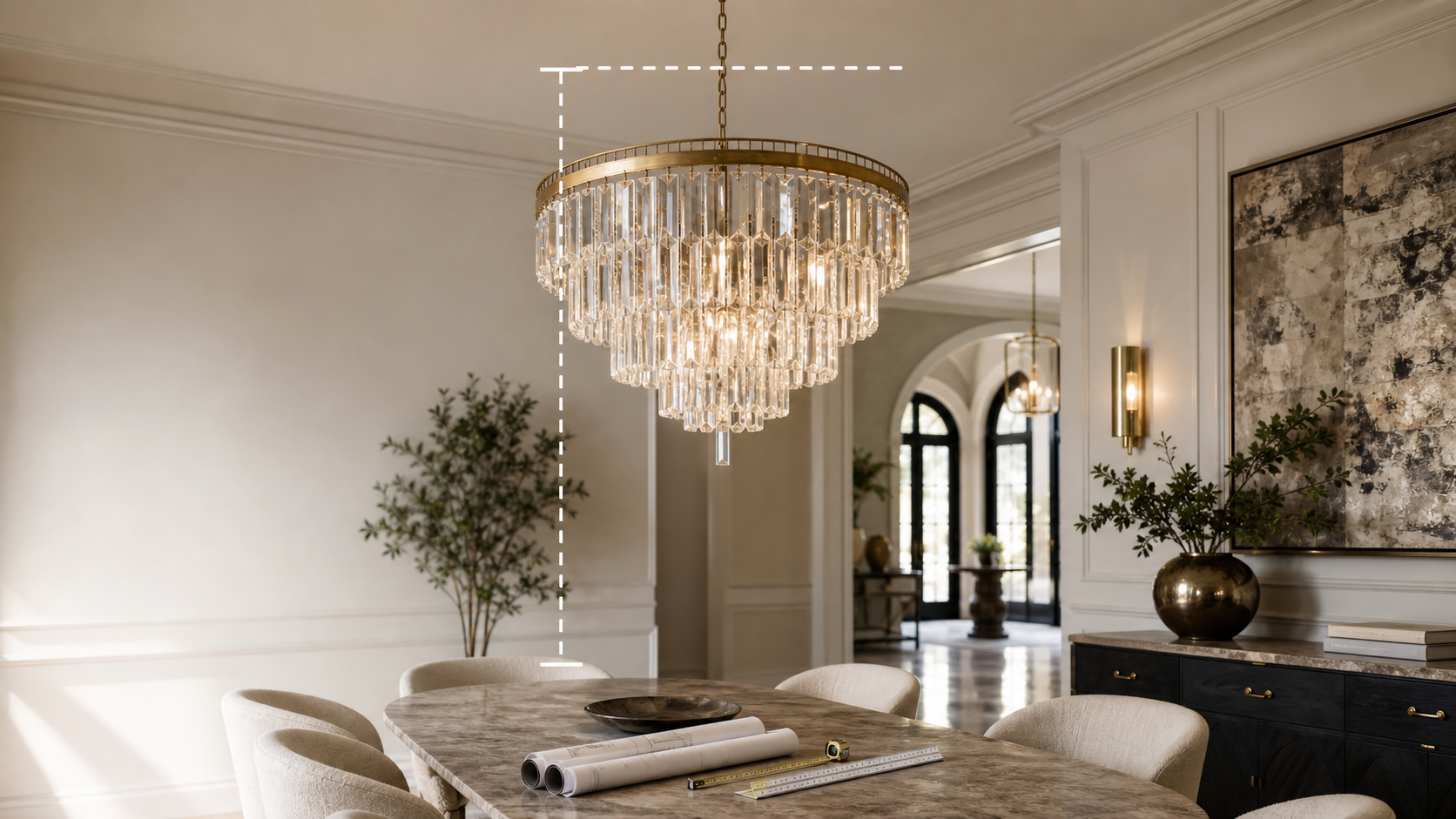
For a dining room chandelier, choose 2700K or 3000K. Dining rooms should feel flattering and relaxed, especially at night. A warm white bulb softens skin tones, makes food look more appealing, and helps a statement chandelier feel more luxurious.
If your dining room has dark walls, smoked glass, or a dramatic chandelier such as the Delsie Oval Chandelier, 2700K can create a warmer evening atmosphere. If the room has white walls or an open-plan layout, 3000K may feel cleaner.
Kitchen Island
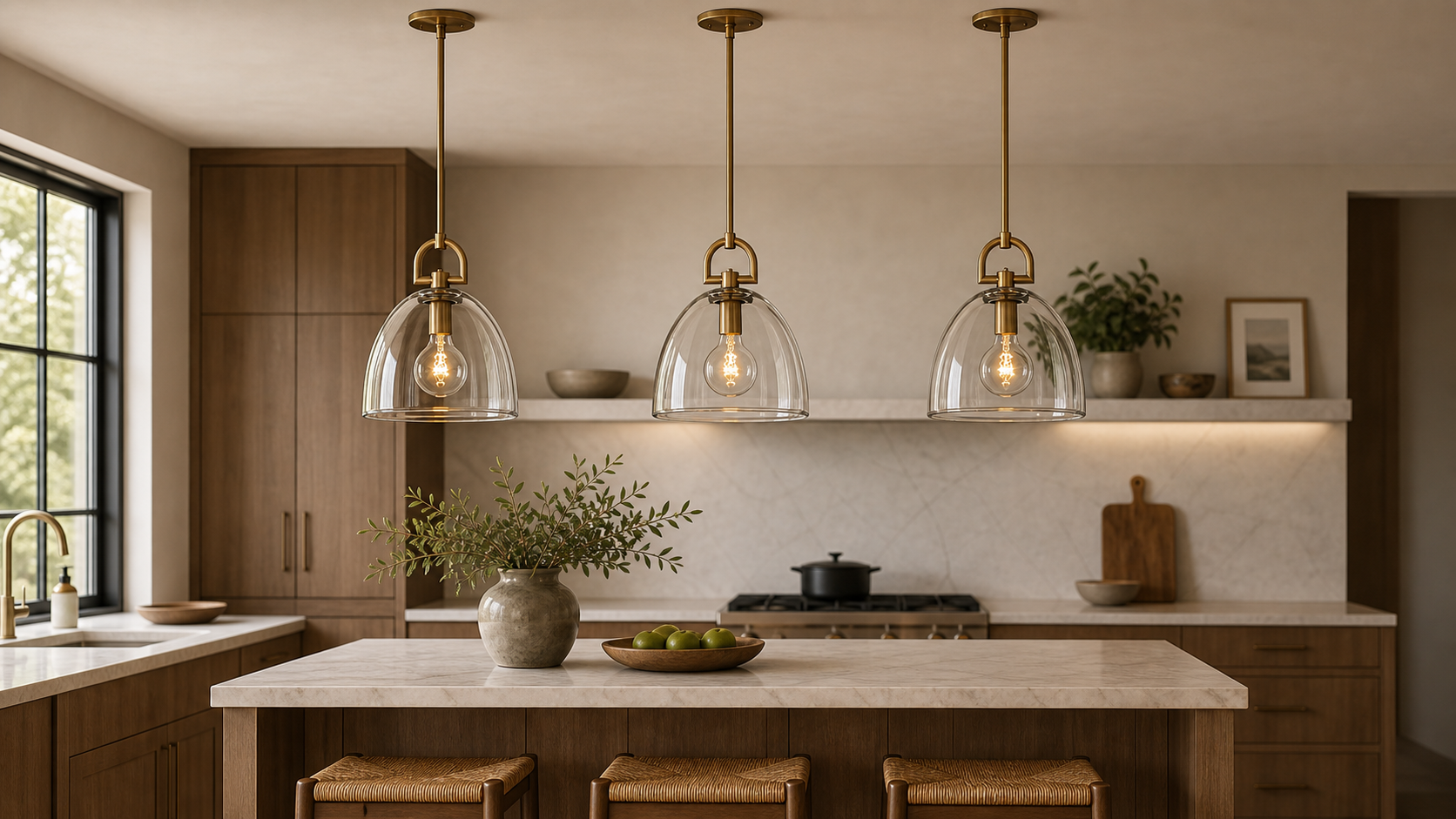
Kitchen island pendants need to balance atmosphere and function. If the island is mainly for meals and conversation, 3000K is a strong choice. If you do a lot of food prep under the pendants, use 3000K to 3500K so the work surface does not feel dim.
For sculptural or modern fixtures such as a brass linear chandelier or wave chandelier, 3000K usually keeps the look warm while still feeling crisp enough for a kitchen.
Living Room
Living rooms usually look best at 2700K to 3000K. If the chandelier is the main decorative feature, warmer light makes the room feel more layered and comfortable. Combine it with table lamps, floor lamps, and wall sconces instead of relying on one bright ceiling fixture.
Bedroom
Bedrooms should feel restful, so 2700K is usually the best choice. For bedside wall sconces, warm light reduces glare and creates a softer evening mood. If you need reading light, choose a fixture with good placement and a compatible dimmable bulb rather than jumping to a much cooler color temperature.
Bathroom Vanity
Bathrooms are different. For vanity lighting, 3000K to 3500K can be more practical because it gives cleaner visibility for grooming. If the bathroom has a chandelier or decorative ceiling fixture, you can still use 3000K to keep the space from feeling clinical.
Brightness Matters as Much as Color
Customers often blame color temperature when the real issue is brightness. A 2700K chandelier can still feel harsh if the bulbs are too bright or exposed. A 3000K fixture can feel cozy if it is dimmable and layered with other light sources.
Before choosing bulbs, check three things:
- Lumens: how much light the bulb produces.
- Dimming compatibility: whether the bulb, driver, and dimmer work together.
- Shade material: glass, crystal, fabric, and alabaster all diffuse light differently.
For dining rooms and bedrooms, dimming is especially important. A chandelier that looks perfect during dinner may feel too bright during a quiet evening if it cannot be dimmed.
Should All Fixtures in One Room Match?
In most rooms, yes. Try to keep fixtures within the same color temperature family. A 2700K chandelier next to 4000K recessed lights can make the room feel visually uneven. If you already have recessed lights, choose chandelier bulbs that are close to the same temperature or slightly warmer.
Across an open-plan kitchen and dining area, 3000K is often the easiest compromise. It is warm enough for dining and clean enough for kitchen tasks.
Quick Buying Recommendation
If you are unsure, choose 3000K dimmable bulbs for most chandeliers and pendant lights. Choose 2700K when the room is formal, cozy, or used mostly at night. Choose 3500K only when you need a cleaner task-lighting feel.
When shopping Meet Lighting fixtures, also check whether the fixture uses standard bulbs or integrated LED. Standard bulb fixtures give you more flexibility to adjust warmth later. Integrated LED fixtures should be chosen more carefully because the color temperature may be built into the fixture.
Need help choosing a fixture for a specific room? Start with our chandelier collection, pendant light collection, or wall sconce collection, then match the fixture style with the room's mood and lighting needs.